Definition of Forex
Forex trading (Foreign Exchange Trading) is the process of buying one currency and selling another
currency at the same time with the goal of making profit from price changes.
Forex is a global decentralized financial market where:
REMEMBER to choose Lot Size based on the size of your trading account
• Account of $200 – $400 = 0.02 Lot
• Account of $400 – $800 = 0.04 Lot
• Account of $800 – $1200 = 0.08 Lot
• Account of $1,200 – $2,000 = 0.30 Lot
• Account of +$2,000 = 0.50 Lot
• Account of +$10,000 = 1 Lot
Adjust your Lot Size if you have more than one open trade
• Account of $250, 2 trades with Lot Size 0.02, or 4 trades with 0.01.
• Account of $500, 2 trades with Lot Size 0.04, or 4 trades with 0.02, or 8 trades with 0.01.
• Account of $1,000, 2 trades with Lot Size 0.08, or 8 trades with 0.02, or 16 trades with 0.01.
Please note: We are not financial advisors. The trade signals we share are for inspiration only and not financial advice. Make your own decisions and research.
Manage risk efficiently
Every trader has their own tolerance to risk.
Trading instructors will often recommend risking anywhere from 1% to 5% of the total value of your account on any given opportunity. But in truth, you should decide how much you want to risk based on what makes you comfortable.
Once you become more comfortable with the system you are using, you may feel the urge to increase your percentage, but be cautious not to go too high.
Remember, the goal of trading is to either realise a return or maintain enough to make the next trade.
If you’re trading once per day on average and risking 10% of your balance on each trade, it would only theoretically take ten straight losses to completely drain your account. On the other hand, if you were to risk 2% on each trade that you place, you would theoretically have to lose 50 consecutive trades to drain your account.
Risk management
What is risk in trading?
What is risk in trading?
In trading, risk is the potential that your return from a trade may be lower than you expected. That could be because you had to close it beneath your profit target, or it could mean losing all the capital you spent on the position.
No trader gets every decision right. So it’s essential to develop a comprehensive plan for managing risk within your trading – especially when using leverage, which will amplify losses as well as profits.
There are three main types of risk to be aware of:
1. Market risk
Market risk is the possibility that your trades will earn less than expected due to adverse movements in market prices. It is the most common type of risk, and the one that most traders do most work to mitigate.
One important step to controlling market risk is to understand the unique factors that will drive prices on the assets you trade. If you’re buying stocks, for example, then you should learn the effect that interest rates, forex prices and more might have on the companies you are investing in.
Some might be obvious, but others can be more obscure. So even if you think you know your chosen market well, it’s always worth using stop losses and take profits.
2. Liquidity risk
Liquidity risk arises when you can’t exit a trade as quickly as you want to. This may hurt your profits, or lead to a loss from the position.
Say that you own shares in XYZ & Co., a relatively unknown firm. The trade isn’t delivering the returns you expected, so you want to exit the market – but you can’t find anyone who wants to purchase your stock. You may have to sell your shares for a loss to get them off your hands.
Liquidity risk is less of an issue when trading CFDs or forex with a market maker such as FOREX.com. You never own the assets in your account, so you don’t need to find a counterparty for each position.
3. Systemic risk
The final risk you should be aware of is systemic risk. This refers to the chance that an issue with the wider financial system will hurt your bottom line.
A classic example of systemic risk is a global market crash. Here, stocks and indices around the world tumble, with subsequent impacts on other assets. Unlike market risk, the problems are widespread and systemic.
Systemic risk can be tricky to mitigate against, but one common method is diversification. Spreading your trades across multiple asset classes and economies can help protect you if a crash arises. However, you’ll need to ensure that you research each market properly.
Developing a risk-management plan
The key to controlling each type of risk you’ll encounter is to develop a risk management plan. A comprehensive plan will cover your exit strategy, position sizing and how you pick opportunities.
Exit strategy
Before you enter into any position, you should know exactly where your ‘point of pain’ resides: the maximum loss you want – and can afford – to risk from any single position. Consistently allowing losing trades to go beyond this point is a recipe for failure.
So decide the maximum you can lose from any given trade, and stay disciplined about exiting any market if it hits that level. A common mistake among traders is to hold on to losing trades in the hope that they will turn around. A good risk management plan will help you avoid this potential hazard.
Consider entering stops on all your trades.
Position sizing
Another habit of many pro traders involves position sizing, which is where you decide how much capital to allocate to each opportunity ahead of time.
Before you open your first live trade, it’s a good idea to determine a proper position size according to the size of your account. This can help you control and quantify your risk.
Obviously, a £10,000 account may use different position sizes than one with £1,000,000. But, however much you are trading with, you can go a long way to avoiding large losses by paying attention to the sizing of your positions.
Five key things to remember
- Trade with the prevailing trend
Consider taking the path of least resistance and go with the flow of the current market. - Establish a detailed strategy for entering and exiting trades
A detailed strategy defines parameters for getting into and out of trades – so there’s no ambiguity. - Watch your downside risk and be prepared to act decisively
Make sure that you’re disciplined enough in preserving your account so that you can live to trade another day. - Trade with reason, not emotion
Human emotions (excitement, greed, fear) don’t always lend themselves to successful trading. - Avoid trading right around scheduled news events
Markets can become more volatile around news events, meaning prices may move drastically within short periods.
📈 What is Support & Resistance?
🟢 Support
Definition:
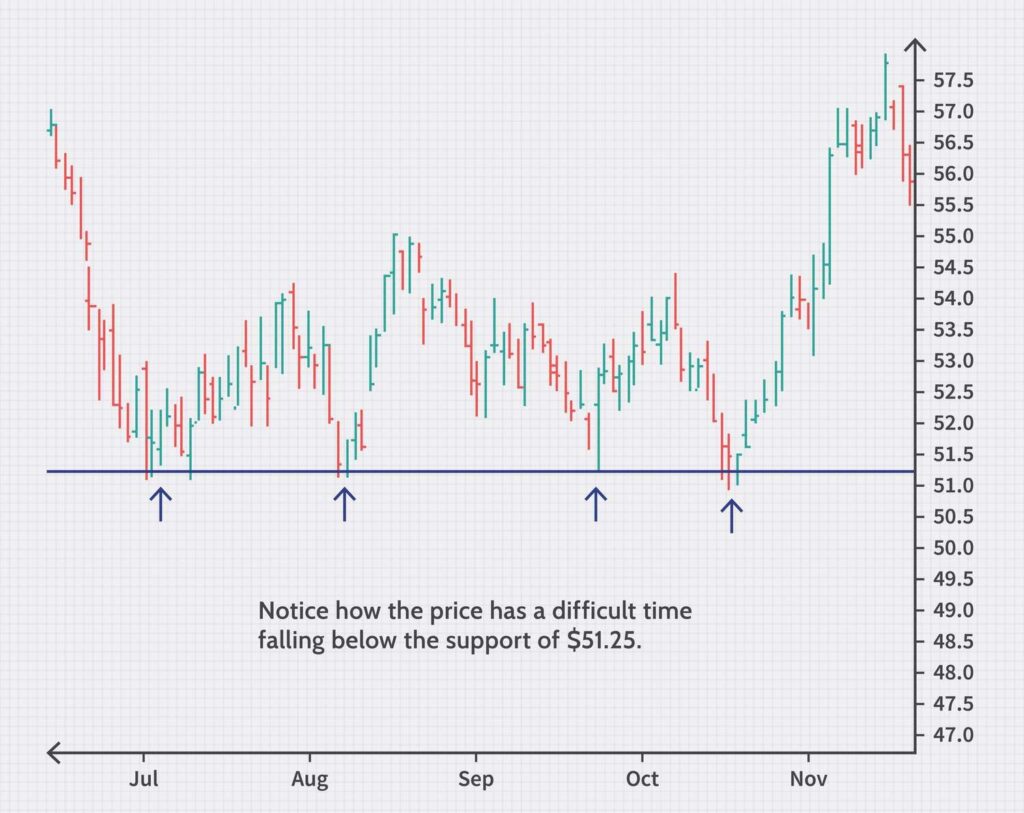
Support is a price level where the market tends to stop falling and start bouncing upward because buying pressure increases.
Think of it like a floor 🏠
Price falls → hits support → buyers enter → price bounces.
Why it happens:
- Traders see price as “cheap”
- Buyers step in
- Sellers take profit
🔴 Resistance
Definition:
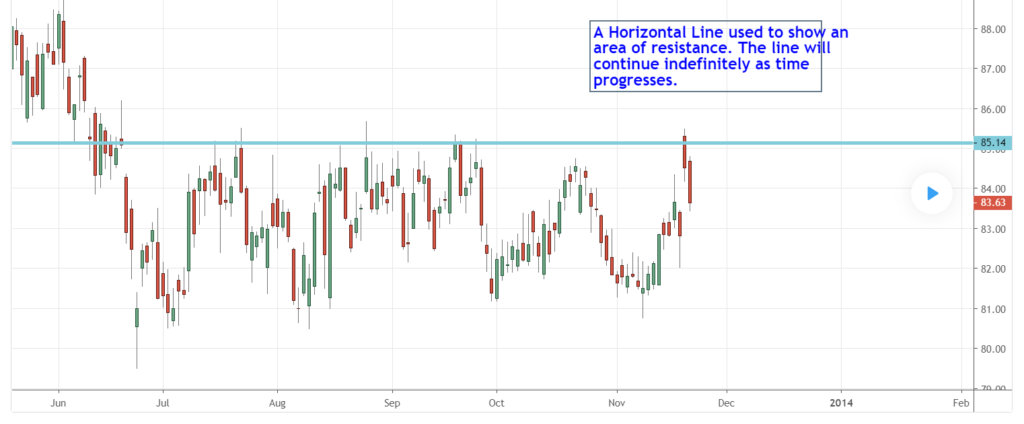
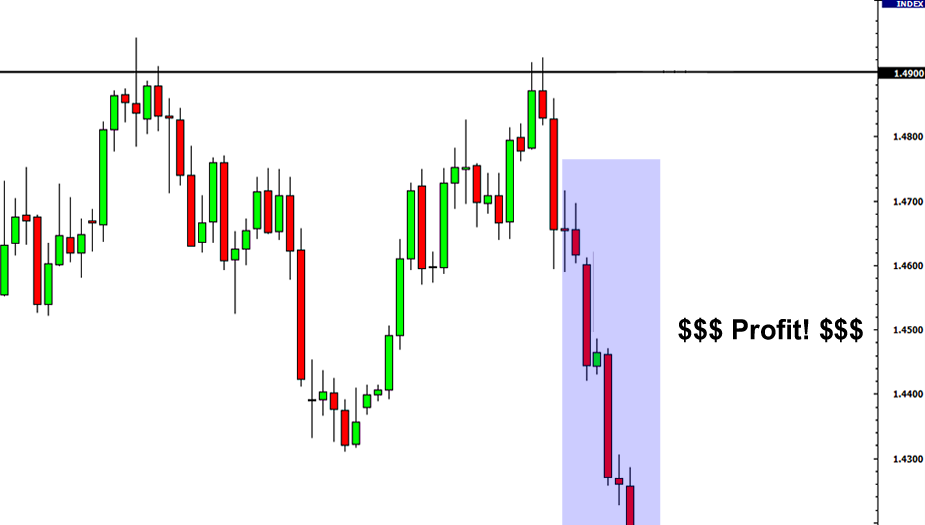
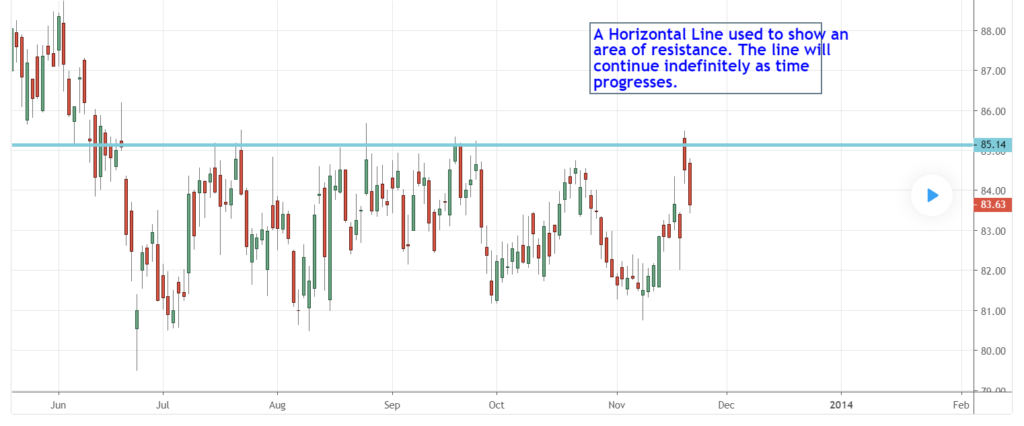
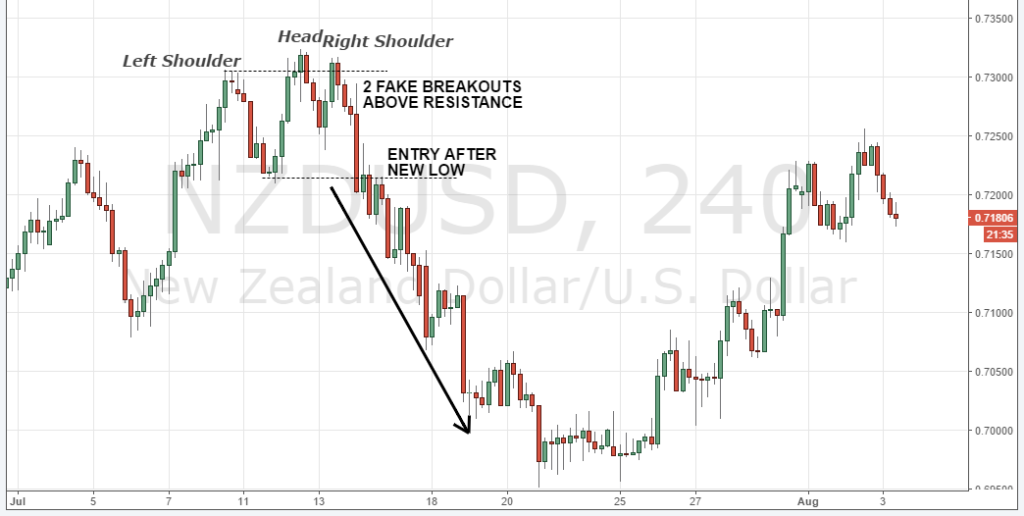
Resistance is a price level where the market tends to stop rising and start falling because selling pressure increases.
Think of it like a ceiling 🏢
Price rises → hits resistance → sellers enter → price drops.
Why it happens:
- Traders see price as “expensive”
- Sellers take profit
- Short sellers enter
🔍 How To Find Support & Resistance (Teach This Step-by-Step)
Step 1: Zoom Out
Go to 4H or Daily timeframe first.
Strong levels are clearer on higher timeframes.
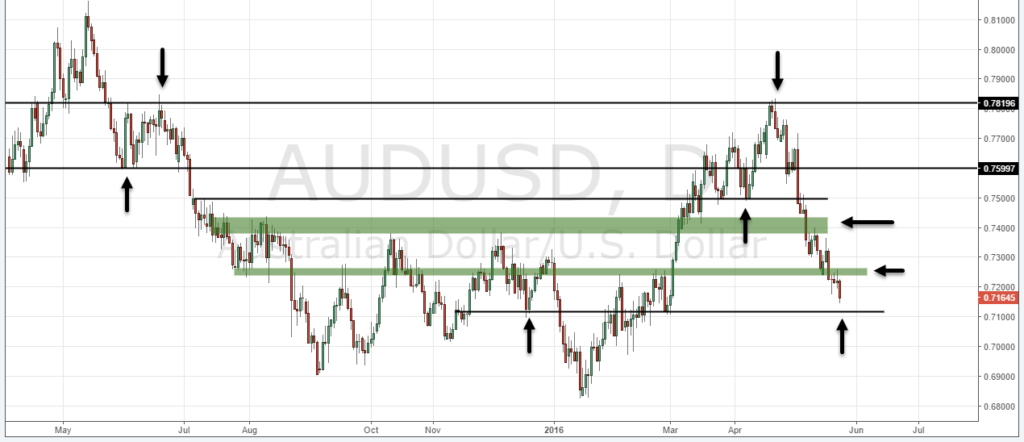
Step 2: Look for Multiple Touches
A level becomes stronger when:
- Price touches it 2–3 times
- Market reacts strongly from it
More touches = stronger level.
Step 3: Draw Horizontal Lines (Not Diagonal)
Support & resistance are usually horizontal zones, not exact lines.
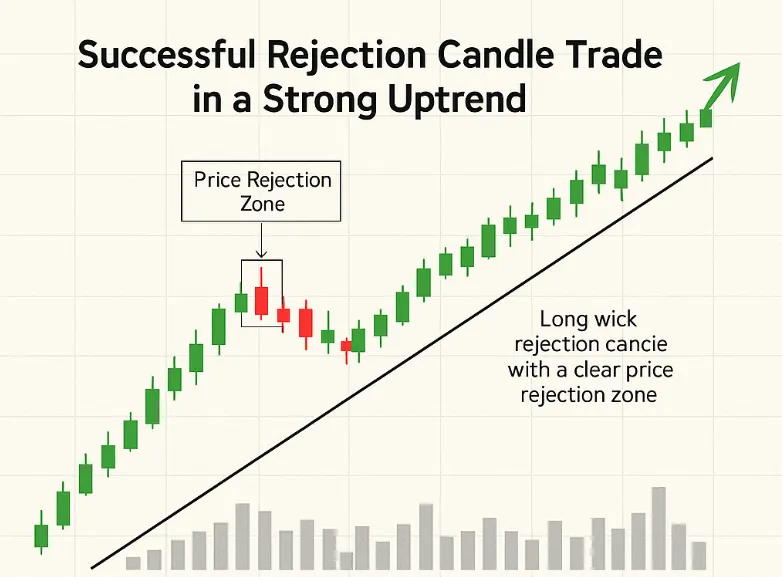
Step 4: Look For Rejection Candles
At resistance:
- Long upper wicks
- Bearish engulfing
At support:
- Long lower wicks
- Bullish engulfing
Role Reversal
When resistance breaks, it often becomes support.
When support breaks, it often becomes resistance.
Lesson 1: Support & Resistance
Support = Area where price stops falling and starts rising.
Resistance = Area where price stops rising and starts falling.
Support acts like a floor.
Resistance acts like a ceiling.
Key Rule:
The more times price touches a level and reacts, the stronger it becomes.
Never trade in the middle.
Trade near support (buy) and near resistance (sell).
🟡 Session Breakdown for Gold
🌏 Asian Session
- Slow movement
- Smaller ranges
- Cleaner small scalps
- Lower volatility
- Less fake spikes
🇬🇧 London Session
- Strong volatility
- Fast impulses
- Stop hunts common
- Bigger candles
🇺🇸 New York Session
- Very volatile
- News releases
- Gold moves aggressively
- Emotional traps